MIDI Memory
A musical history, one take at a time.
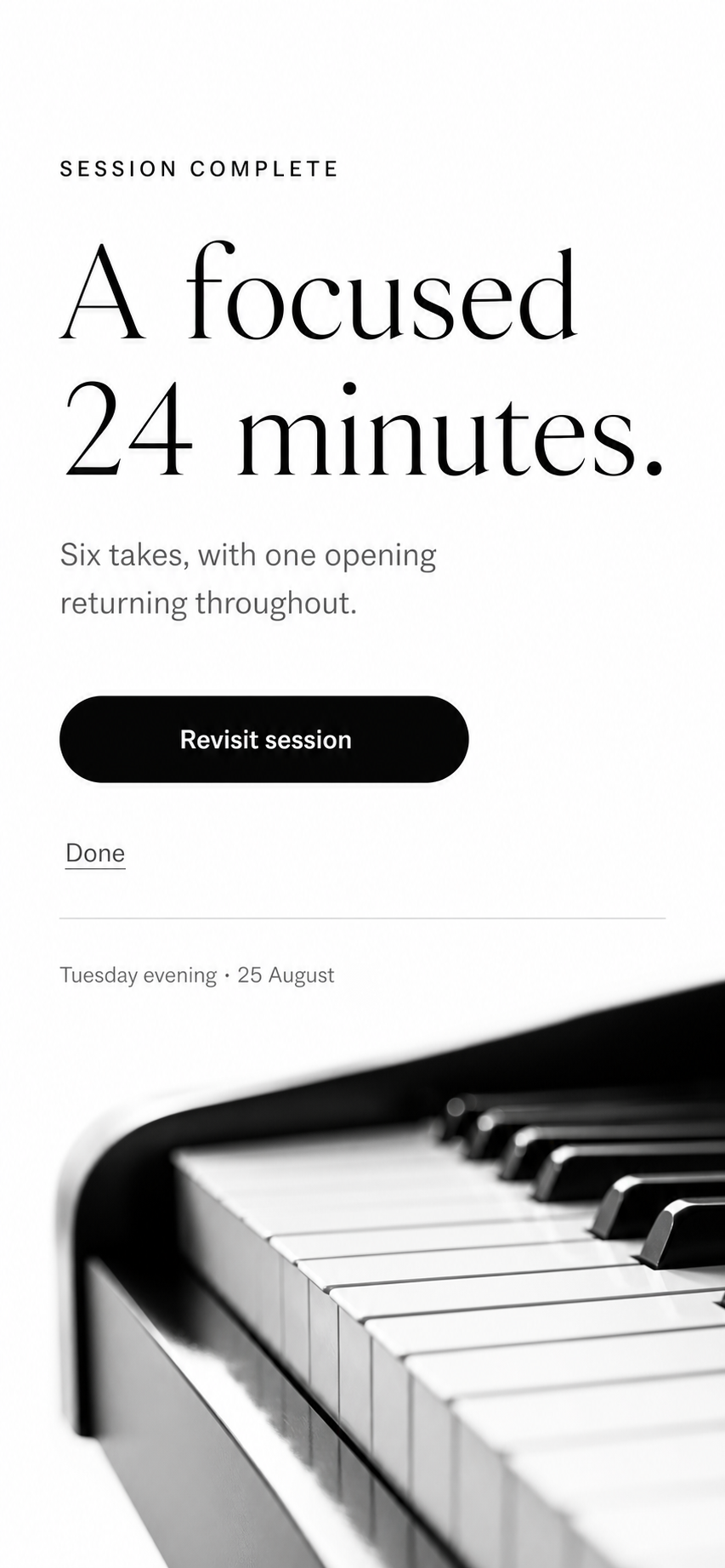
Overview
What if your piano helped you remember the music you keep coming back to? MIDI Memory is my design for how recognising a piece can turn recorded playing into a personal musical history.
A piano can record every take, but a pile of recordings doesn’t help a musician remember anything. I designed what happens after a session ends: short, gentle observations about the music they keep coming back to, and a way to hear it again.
The musician always has the last word. The product describes what happened and never judges how they played.
My role
Interaction design, UX writing, visual direction and prototyping.
- Context
- The C. Bechstein connected-piano app
- Built on
- A MIDI capture concept that already organised playing into Sessions and Takes. My work starts after that.
- Status
- Concept and interactive prototypes. Not a launched product.
Key decision
Describe, never judge.
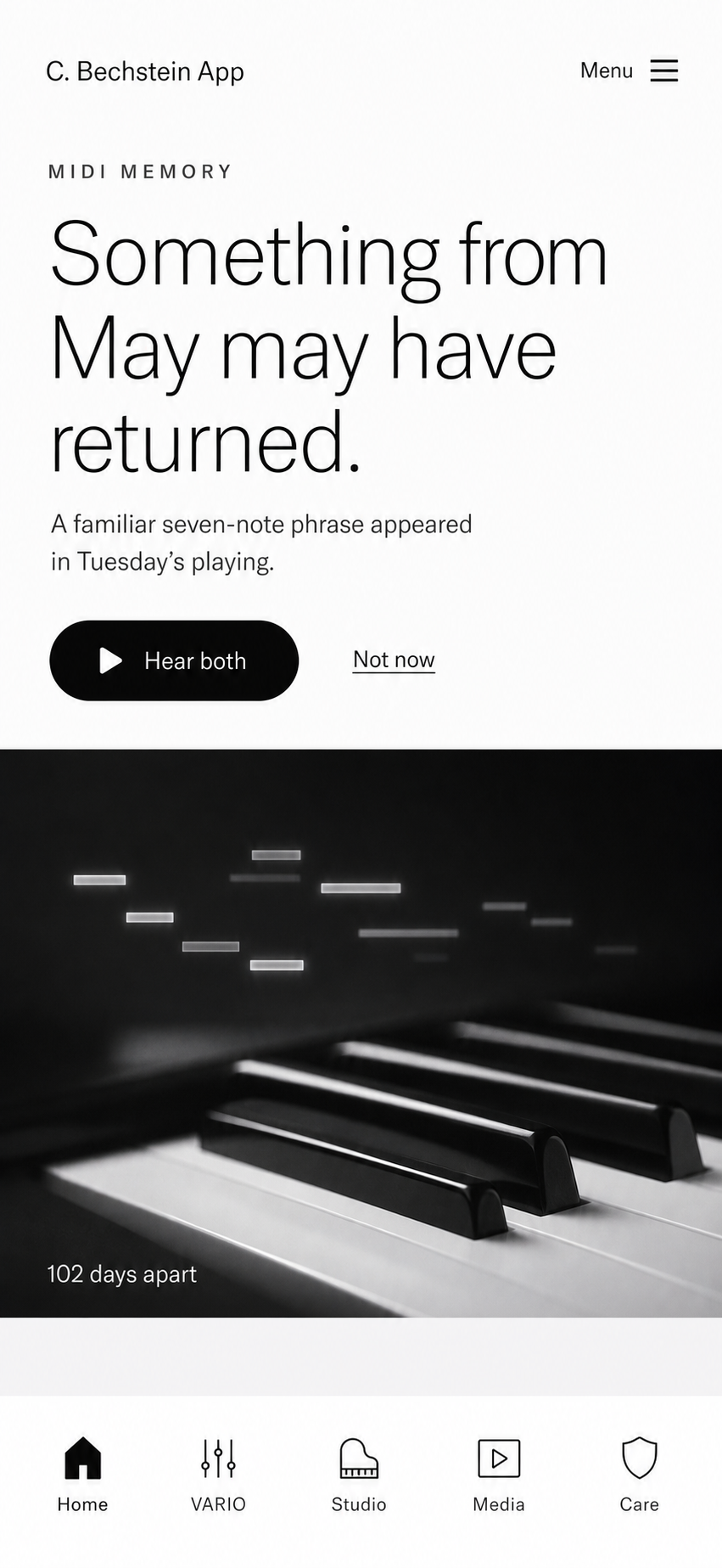
I left out scores, streaks and “best take” language, and let the evidence decide how specific a sentence can be. When the system isn’t sure, it says so (“may have returned”) and lets the musician connect, separate or skip.
A recording captures a moment. A memory connects it.
A pile of takes only tells you when someone played. Knowing the piece adds more: four takes of Für Elise in one evening, a return to Clair de lune after weeks away, a month spent with Debussy. This concept makes those connections visible.
From sessions to takes to familiar pieces.
Sessions stay the container for playing. Pieces are identified at the take level, so the same piece can connect across sessions. From that I proposed six moments worth showing: the end of a session, staying with one piece, a return, a favourite that keeps coming back, a first appearance, and a monthly look back.
Recognition without a score.
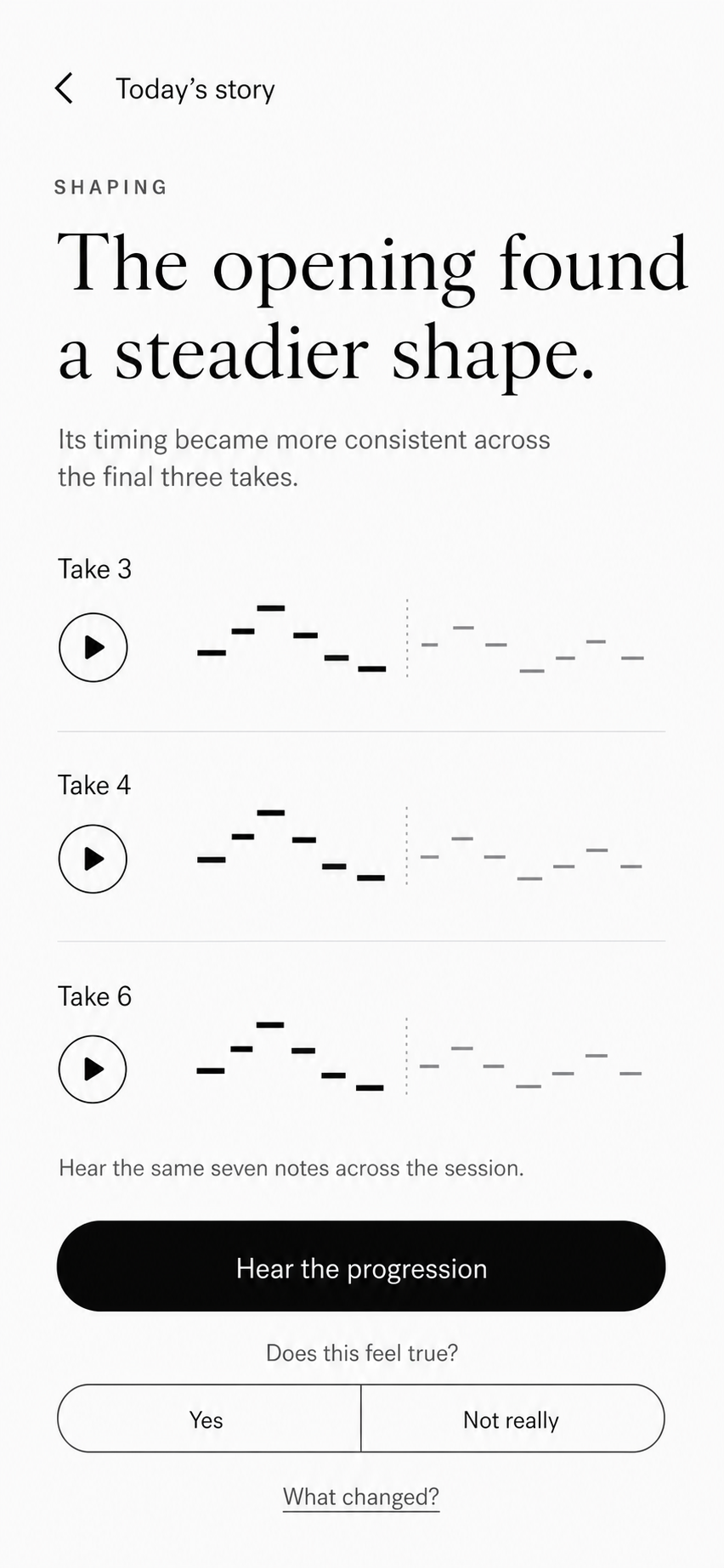
Each screen starts with one short observation, then a visual trace, then an invitation to listen again. Timelines show returns, and repeated note patterns show related takes. Quiet type and few colours keep the focus on the musician’s story.
Starting with what the system can’t name.
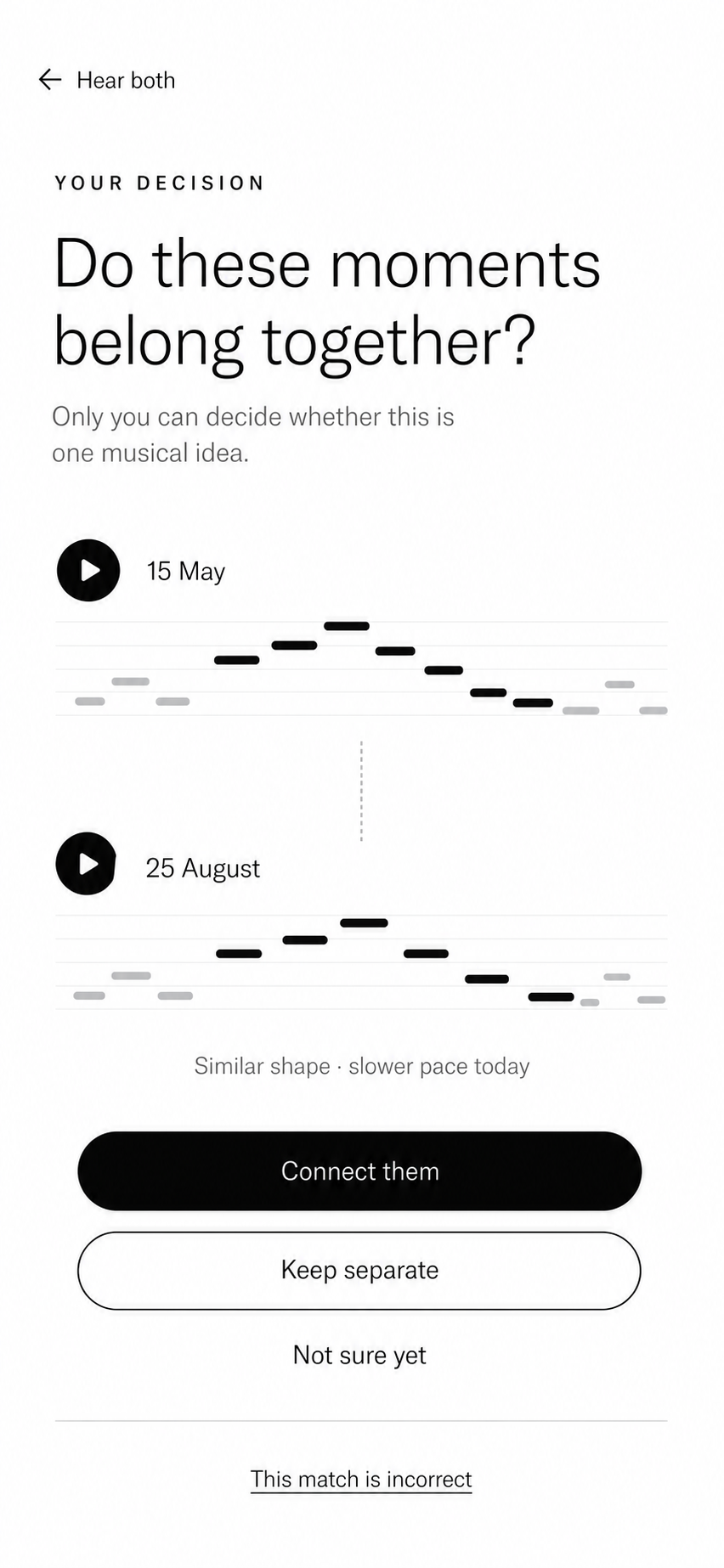
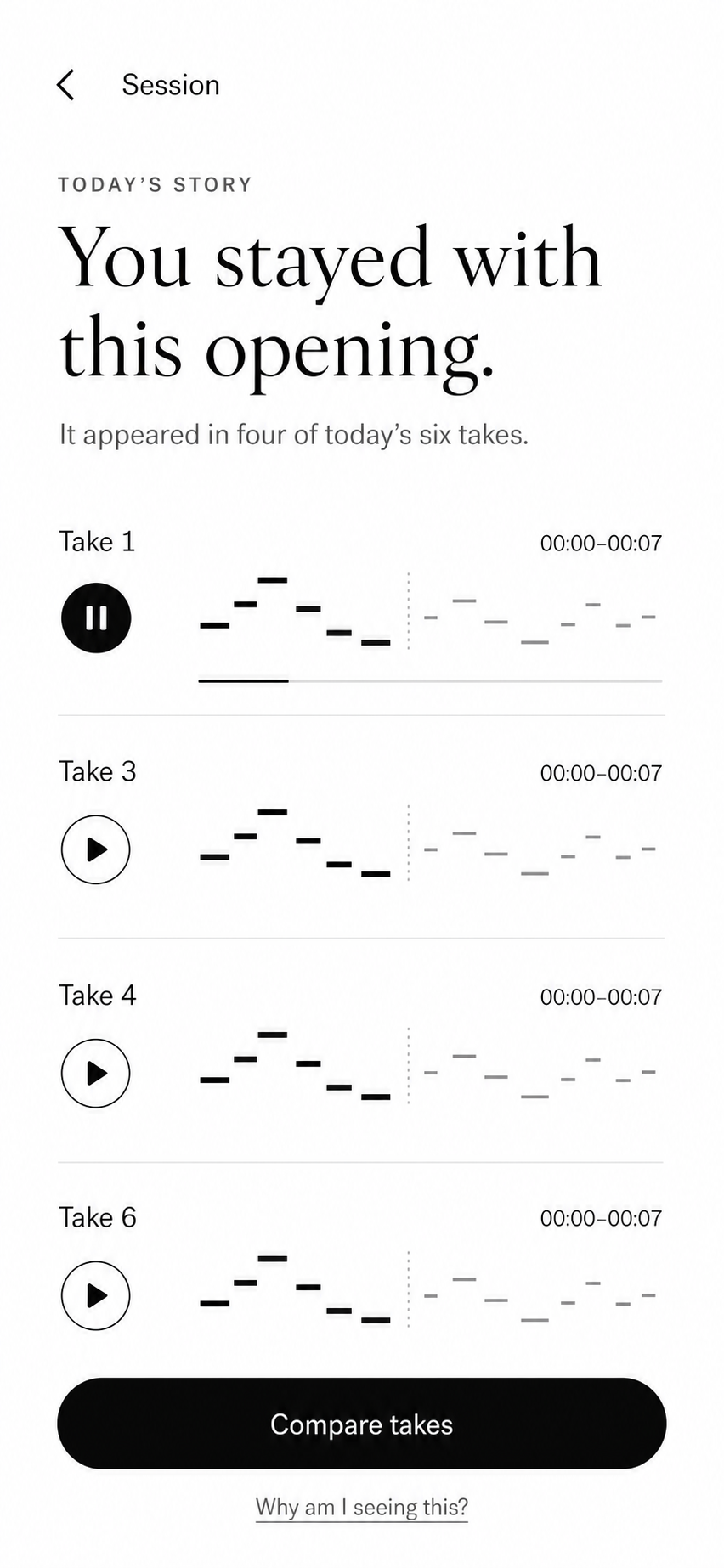
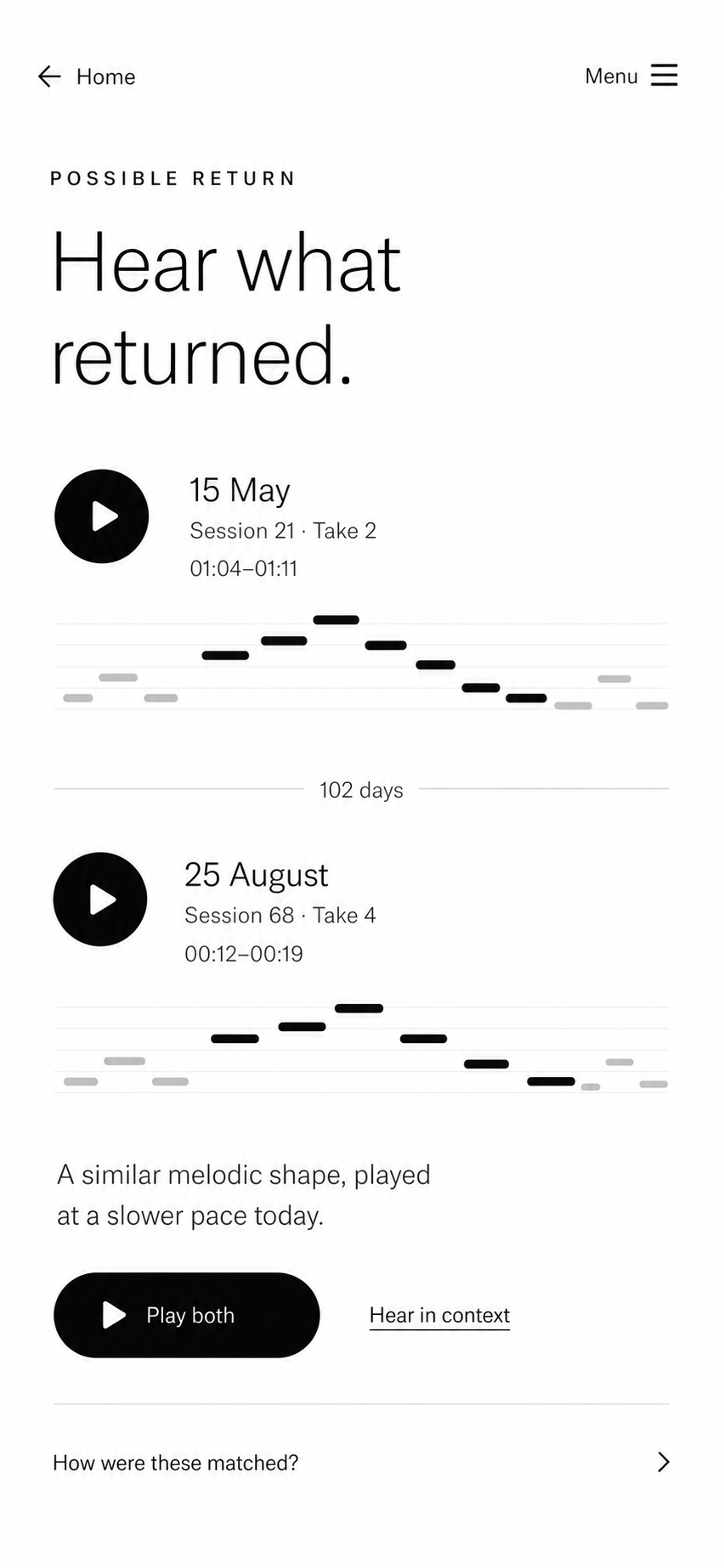
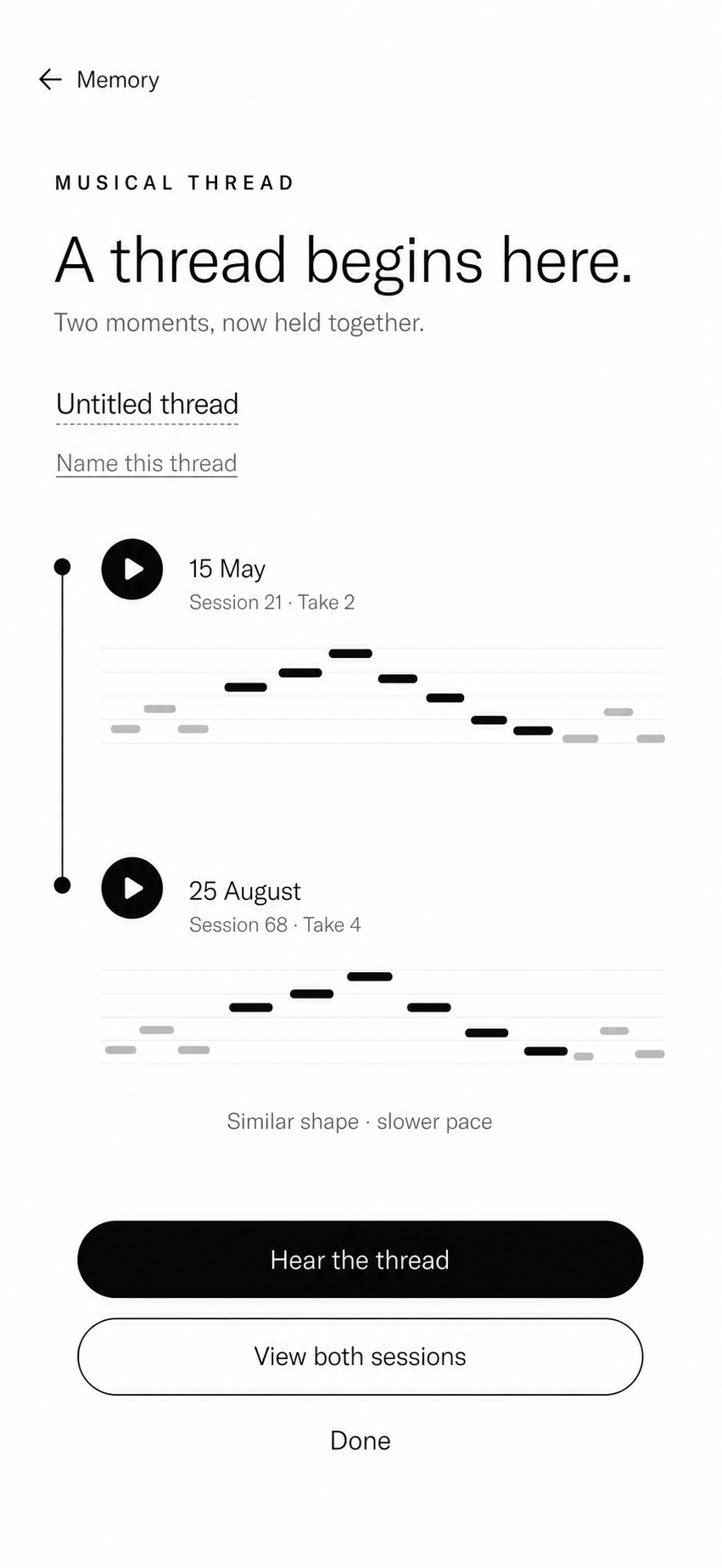
Before pieces could be recognised, the first flow worked with material that had no name: an opening that repeated through a session, and a phrase that might have come back after 102 days. The wording stays tentative (“may have returned”). The musician hears both moments and decides: connect them, keep them separate, or not sure yet.
A separate “This match is incorrect” option keeps a factual correction apart from a matter of taste. All dates and sessions are made up.
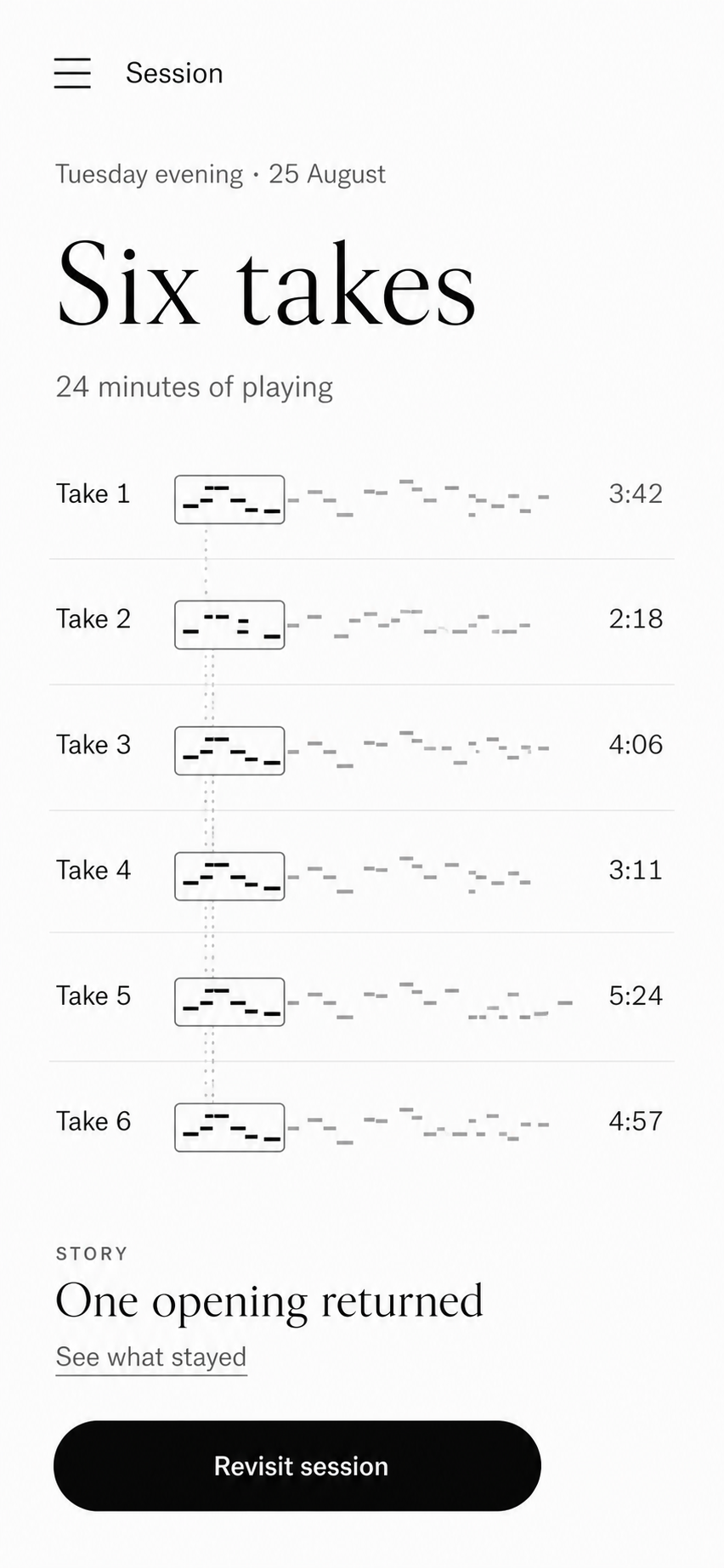
Turning notes into marks.
This is where I introduced the graphics. Every note becomes a thin horizontal line. Where it sits shows when it was played and how high, and its length shows how long it was held. The phrase that matched is black, and everything around it is a quiet grey.
They aren’t decoration. They let a musician see a repeated opening, a return or a steadier shape without a score, a chart or a grade. They also became the base for the sharing postcards later, using the same MIDI-to-visual translation.
Describe what happened
Show what was played, without judging skill or progress.
Respect the gaps
A first appearance means first in the captured history. Takes that weren’t identified still belong in the archive.
Leave room for the musician
Recognition is a starting point. The musician knows what they played and what it means.
Your playing, remembered.
An archive that recognises the pieces you return to, and never judges how you play them. These six screens are the next iteration: the same ideas applied to identified pieces, with a more refined look.
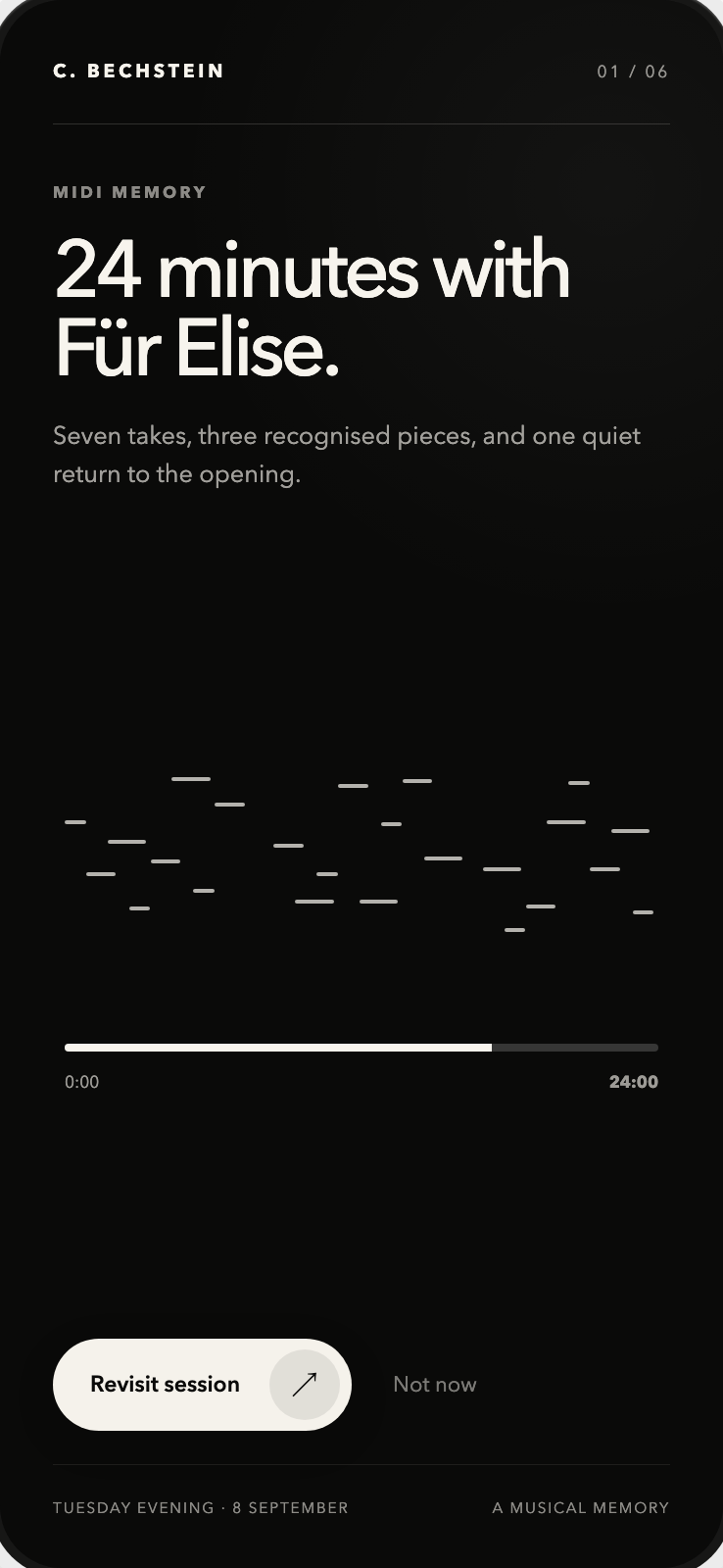
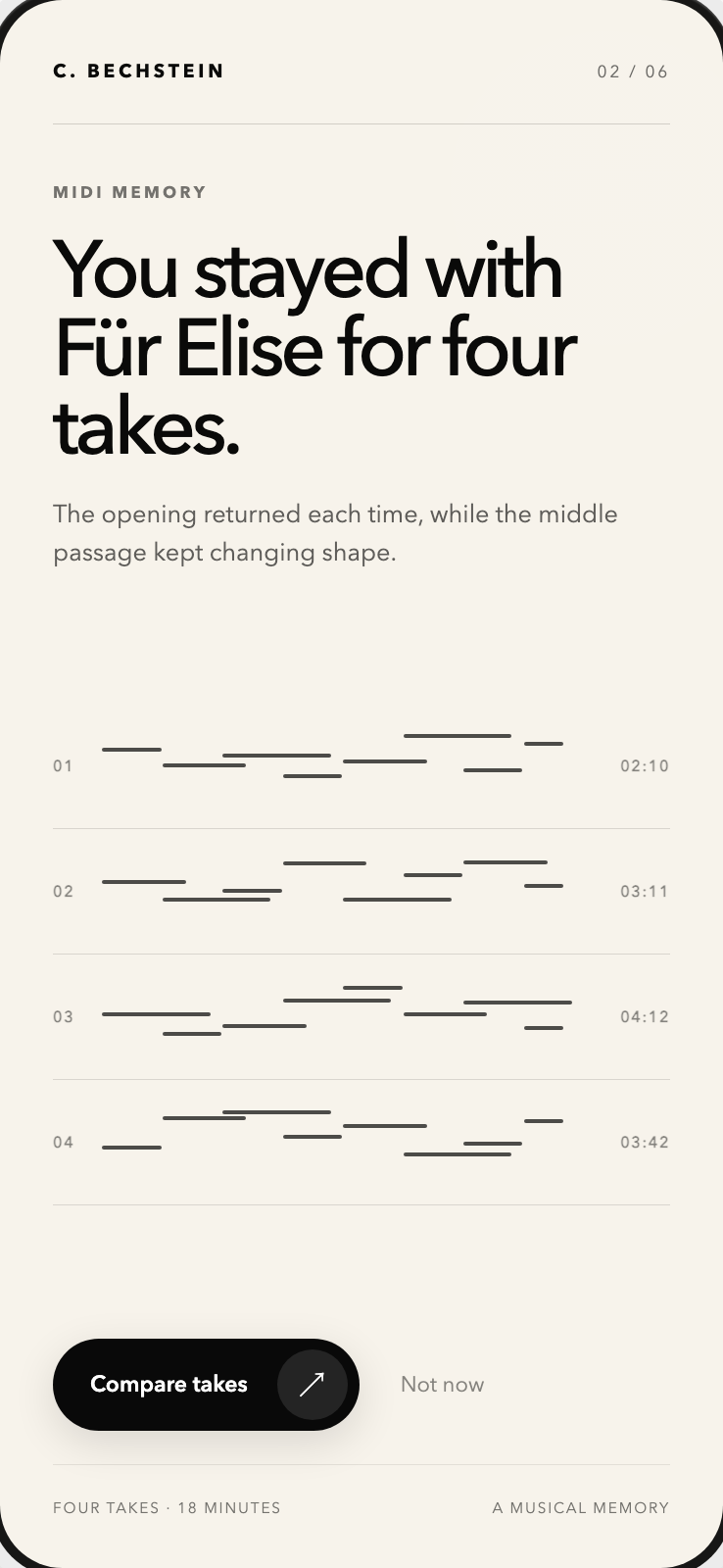
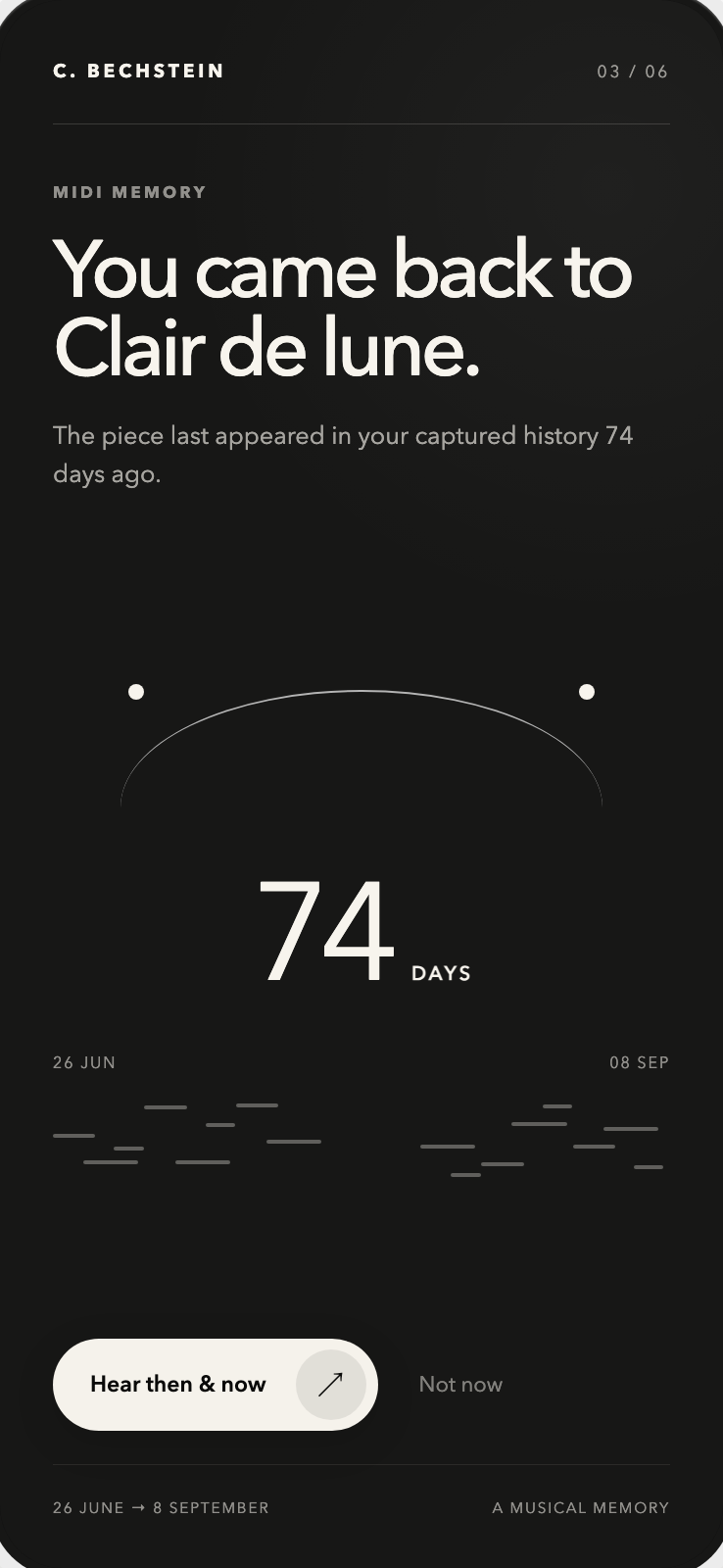
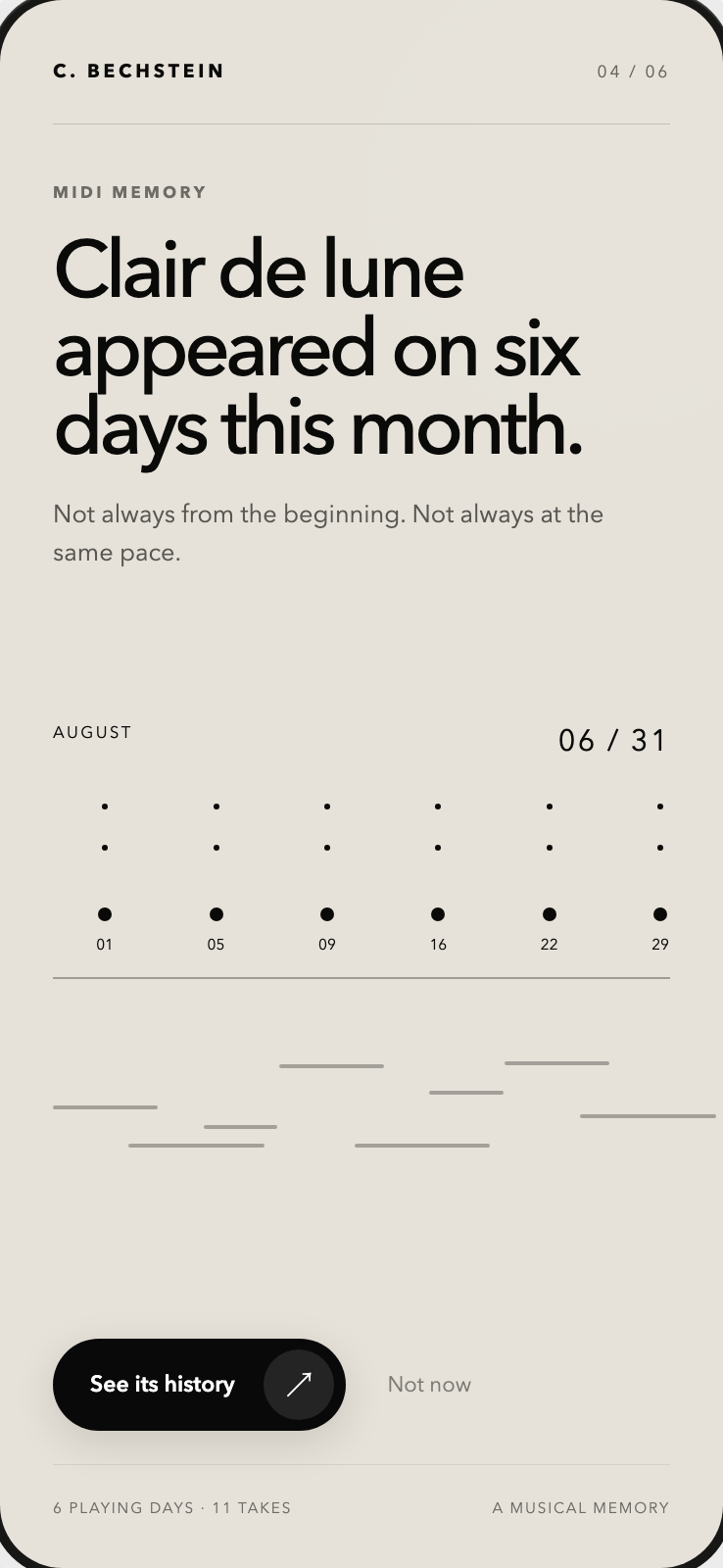
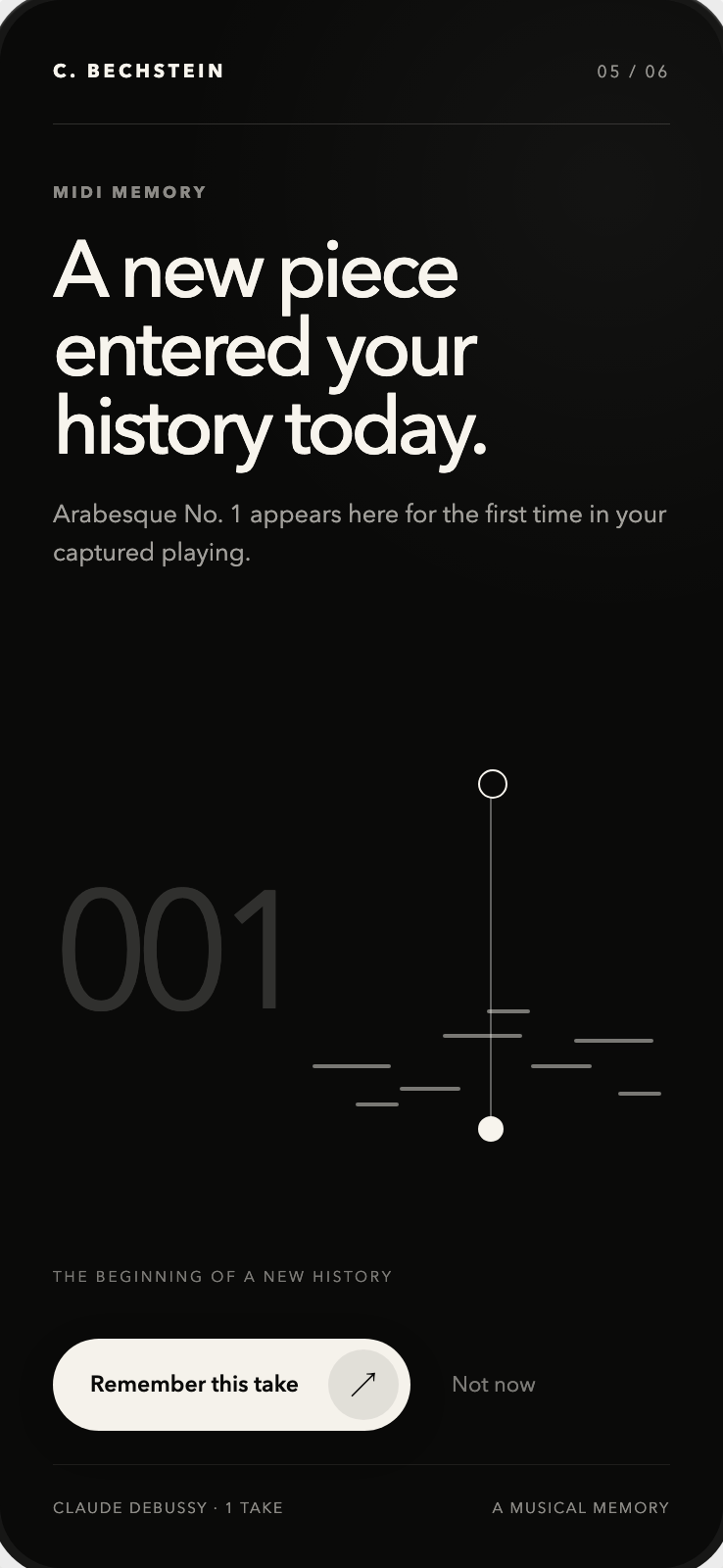
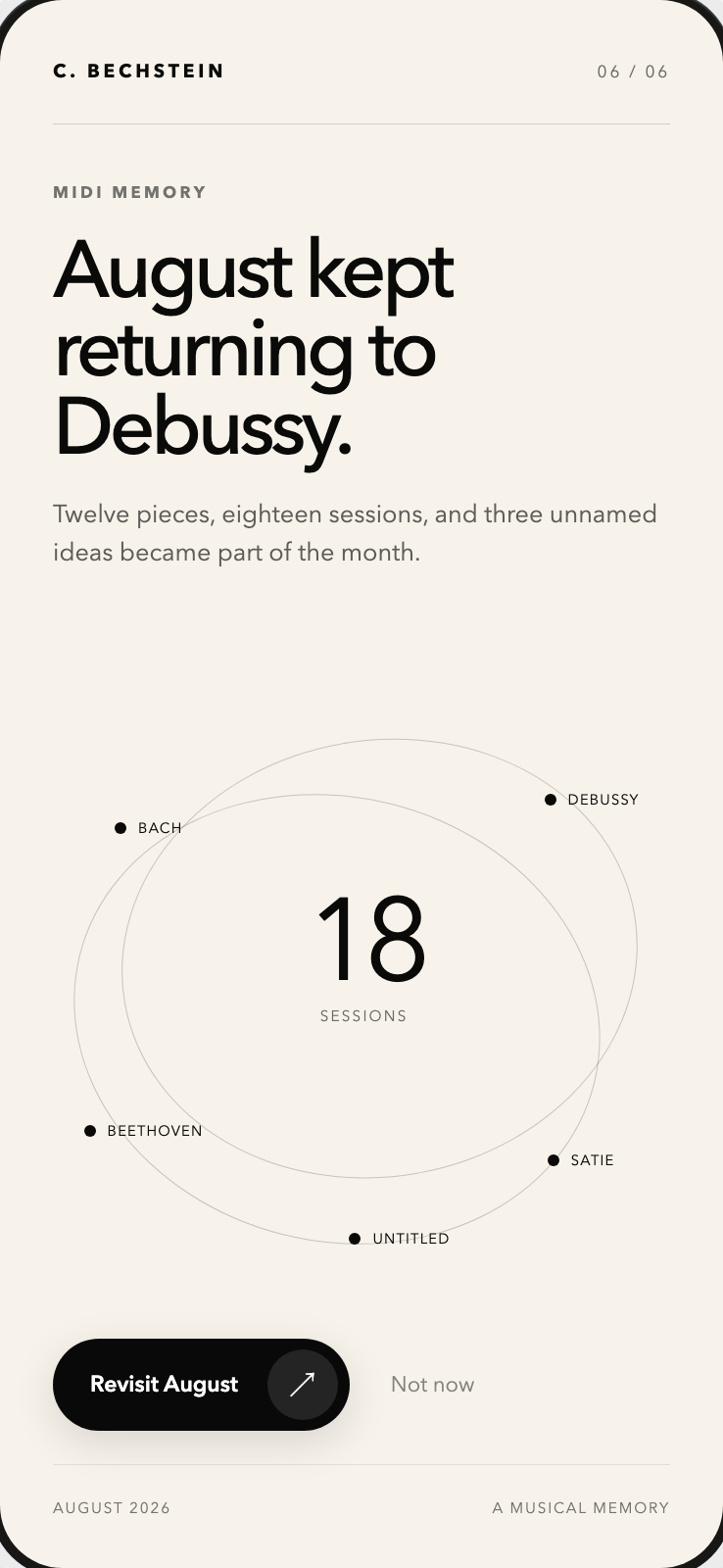
Concept prototype · Example playing history. These screens show the experience I designed. They don’t demonstrate a working identification model. The system recognises and remembers. The musician decides what it means.
One intelligence, two levels of disclosure.
Musicians see one calm sentence and one action. The team needs more, so I designed an evidence workspace that lays out what’s behind each observation: what was detected, repeated attempts, the piano roll, confidence, and data-quality warnings. Confidence describes how sure the system is, never how well someone played.
Behind both sits a language system. Each moment defines the evidence it needs, the words it can use, the action it offers, and the claims it must never make. An uncertain match stays unnamed, and a correction updates every story built on it.
From private memory to shareable postcard.
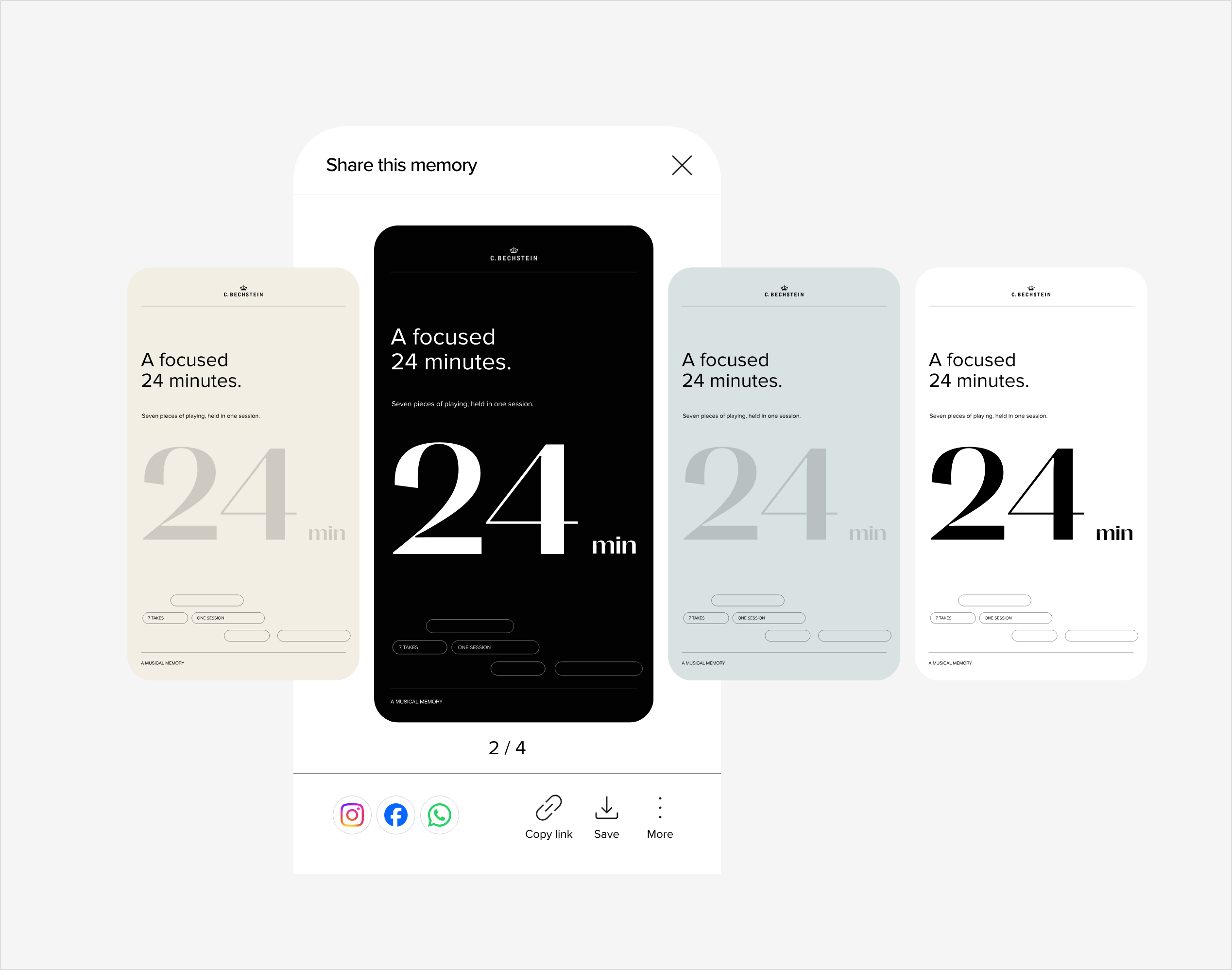
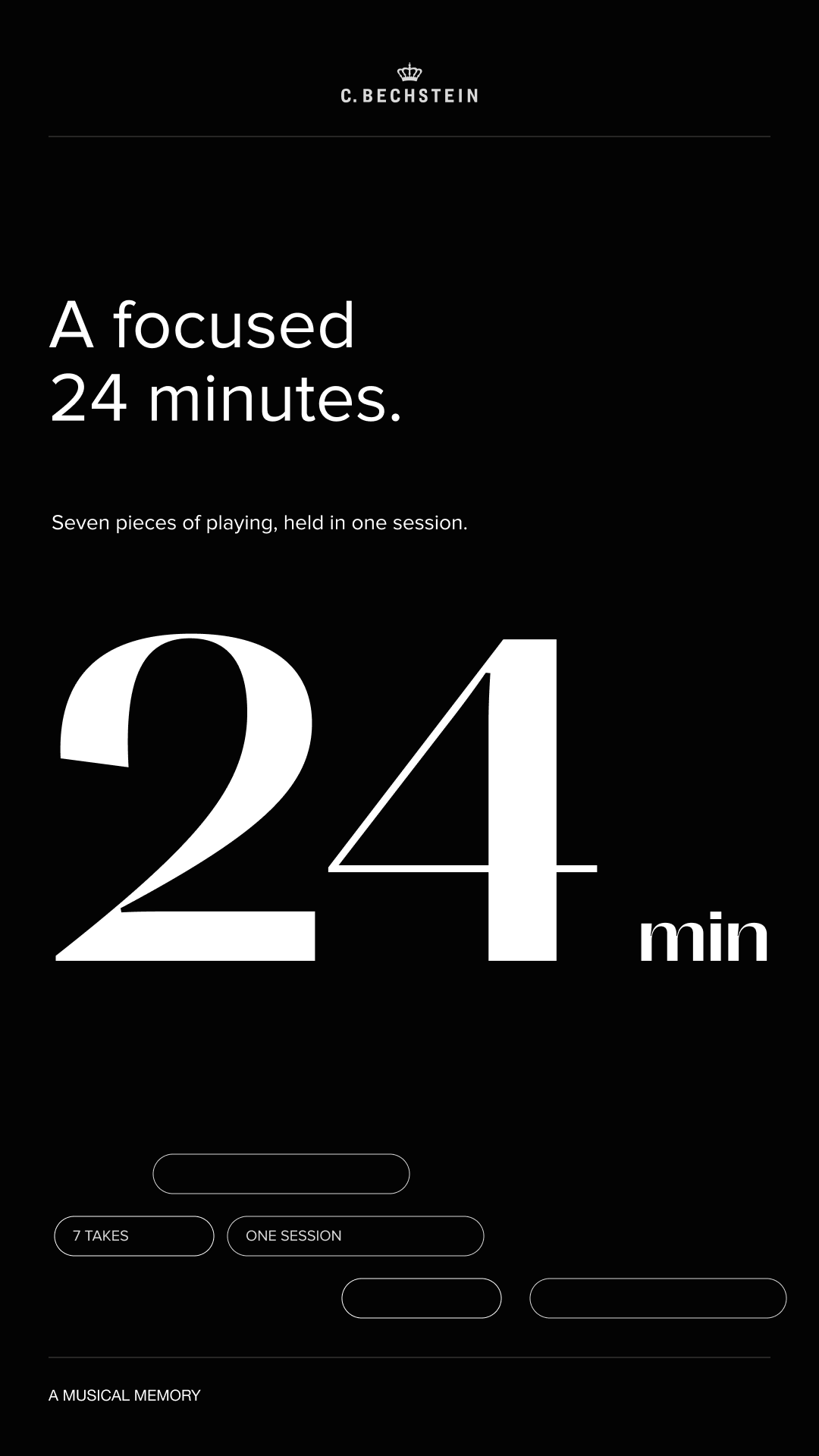
The marks can travel. I designed a way for one memory to become a small piece of media that the musician chooses to share. Nothing is public by default, there’s a review step before export, and the musician can reject the connection itself.
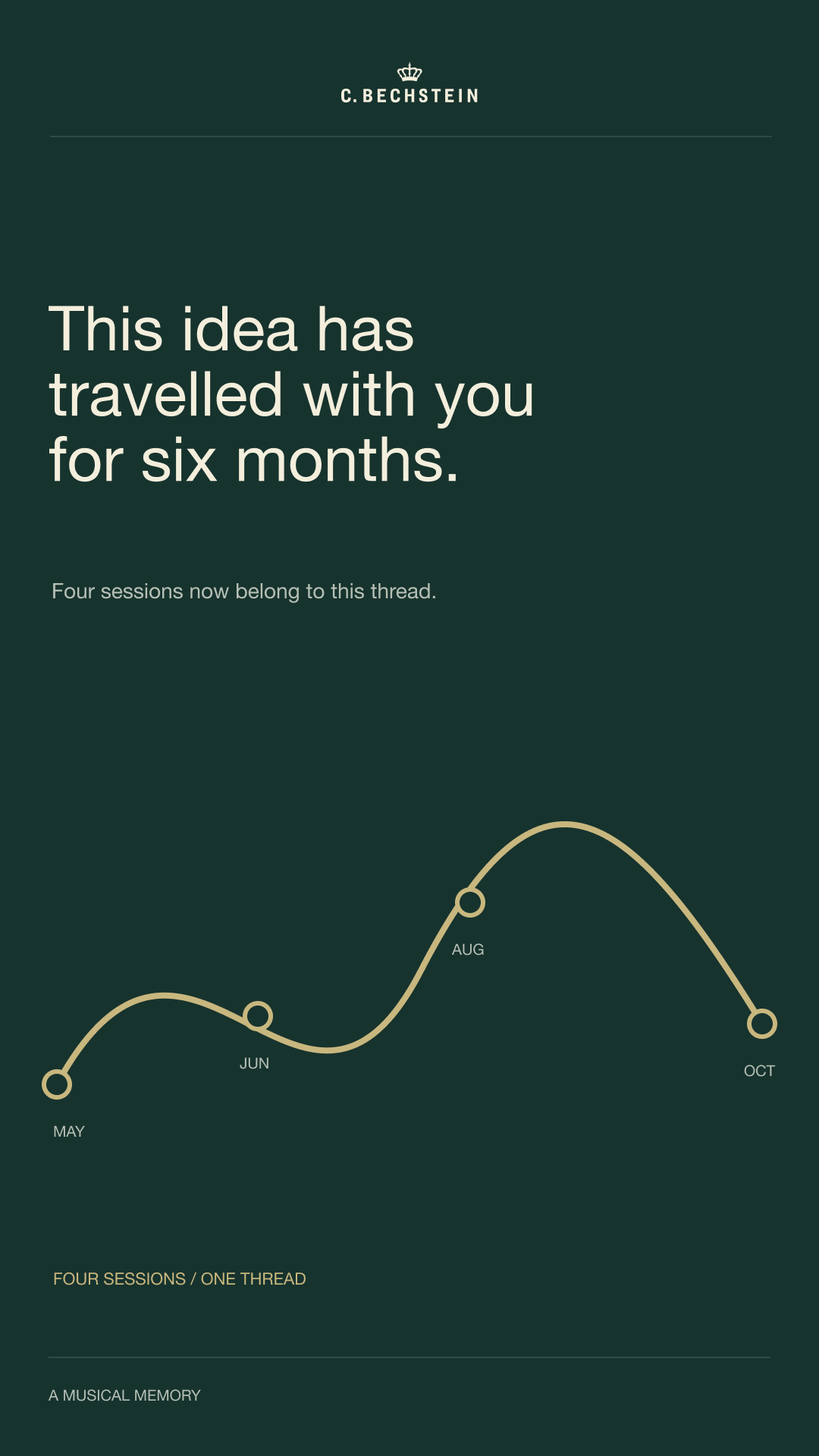
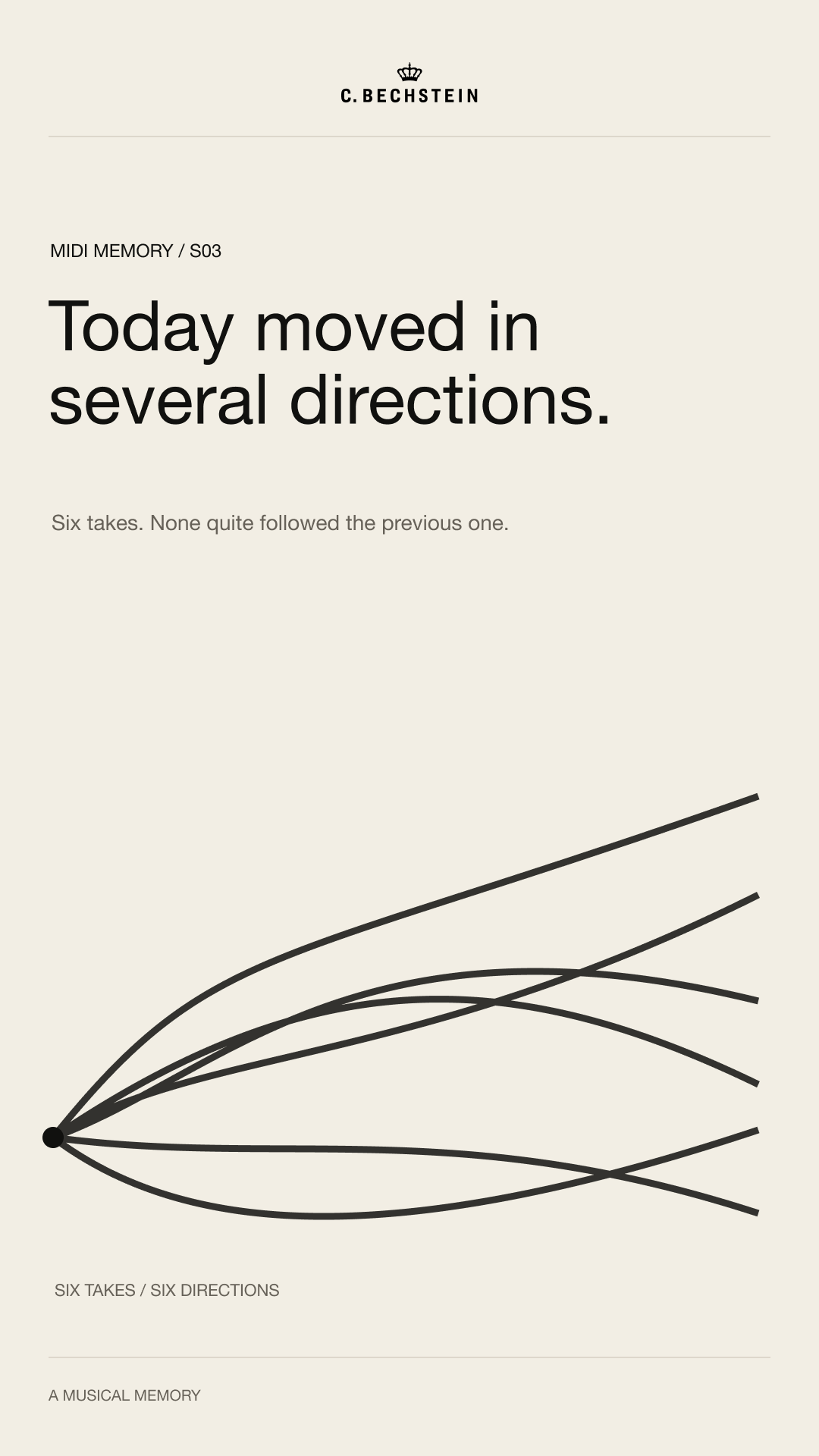
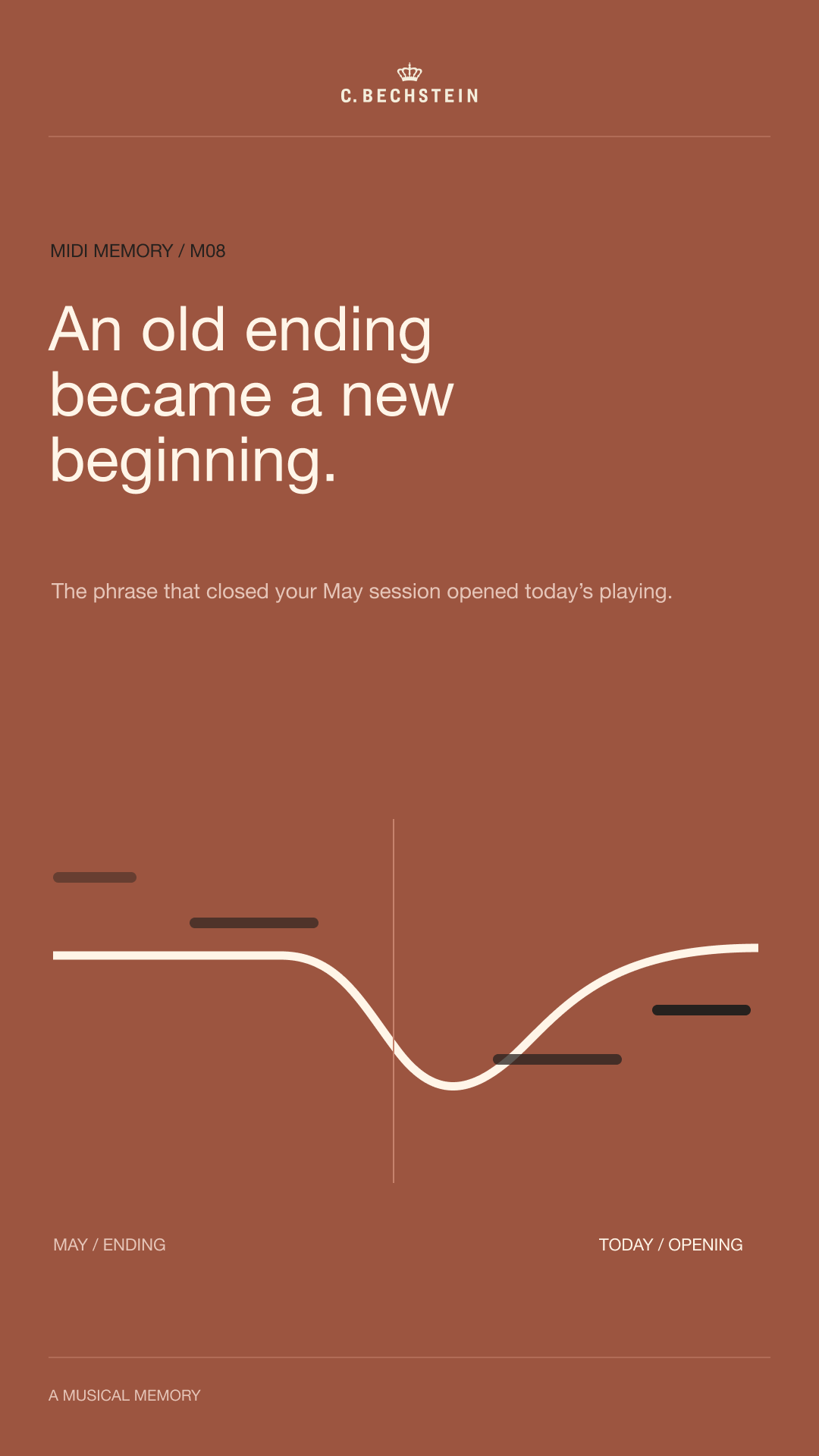
It started with rough studies: twelve poster sketches testing whether each moment could have its own shape. A session became a block of time, a thread became a line across months, and an ending became a beginning.
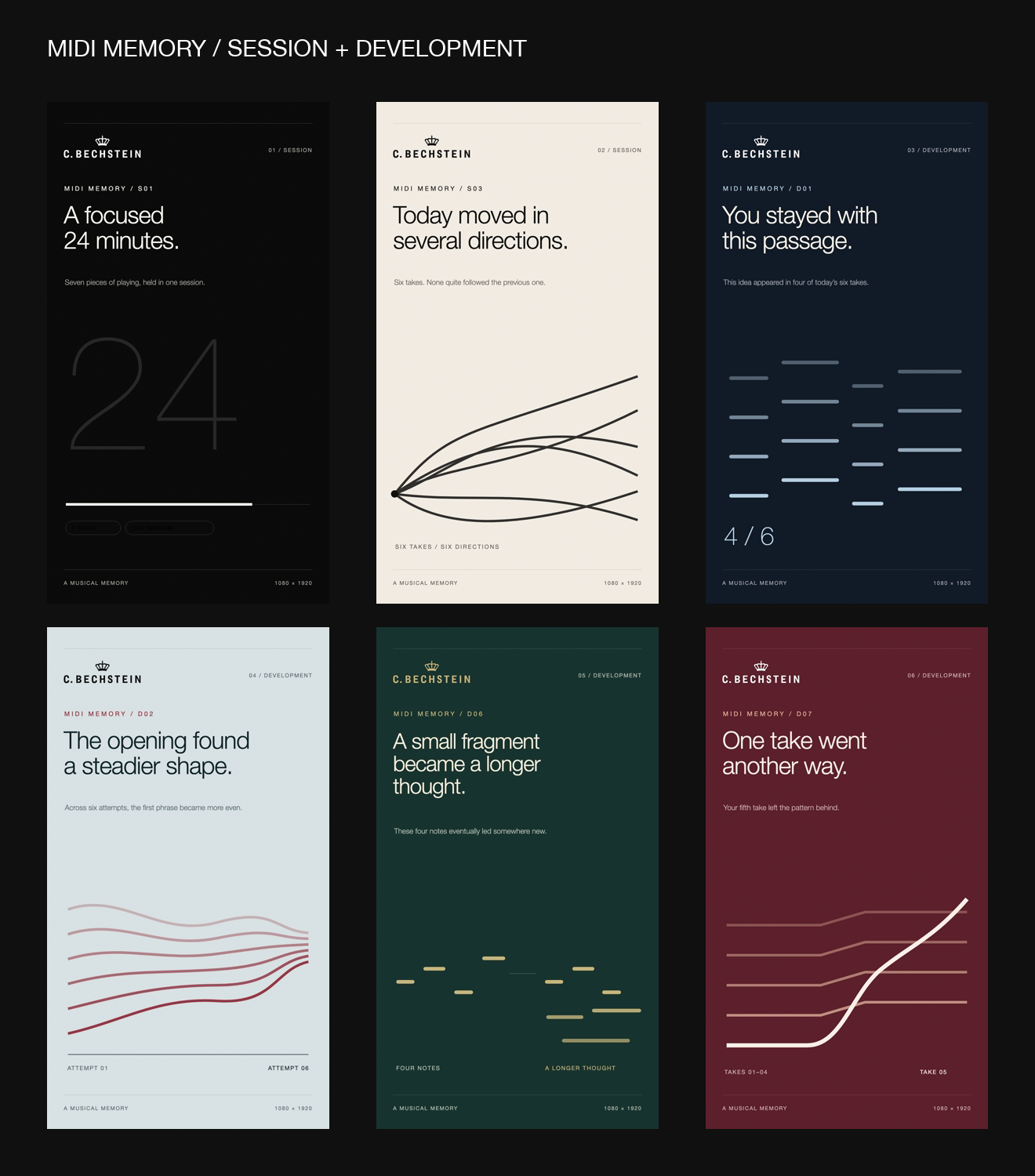
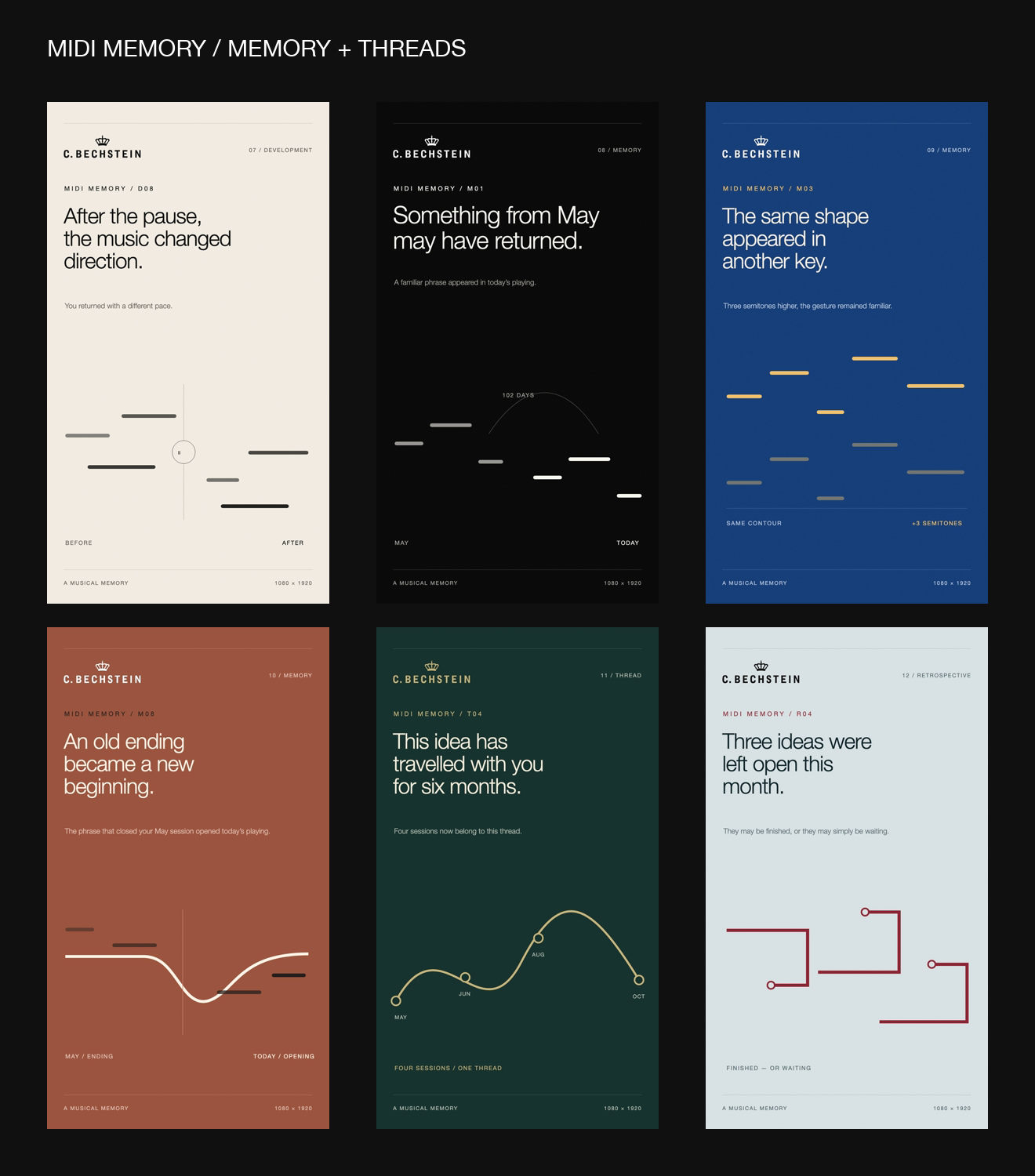
I then moved the strongest ideas into Figma as a proper draft, using the brand logo and typeface, and put them in a share sheet inside the app. The musician sees the postcard in four tones, picks one, and shares or saves it. Nothing leaves the app before that choice.
Letting the interface step back.
A related concept I introduced, then designed and prototyped in HTML. The controls that help you set up a session compete for attention once you start playing. Zen Mode puts a quiet line between getting ready to play and playing.
It has two optional views. Score Focus keeps the score on screen and moves everything else away. Screen-Free lets the display settle while listening continues. The musician previews a view, picks it once, and enters with one action. It never starts on its own, and one tap brings the normal interface back.
A visual prototype. It does not record or listen to audio.
The quietest moments were the best ones.
The hard part wasn’t visualising MIDI. It was deciding how recorded playing could feel meaningful without the interface claiming to know what the music meant. The system notices a connection, says just enough, and leaves the meaning to the player.
Next I’d test the wording with a small group of connected-piano owners, compare tones from purely factual to gently reflective, and test three levels of certainty: an unnamed observation, a suggested connection, and a named piece.